
On The Simpler Recycling Changes 2026
The new legislation on Simpler Recycling is in force now for businesses with 10 or more full time employees but businesses with less than 10 have been given a longer transition period and must comply with the new requirements by 31st March 2027.
What is Simpler Recycling?
Simpler Recycling is designed to standardise waste collection by requiring businesses to separate recyclable waste streams such as dry mixed recycling, food and glass, reducing general waste and increasing recycling overall. The aim is to enable consistent, more streamlined collections from all households, businesses and relevant non-domestic premises (such as schools and hospitals).
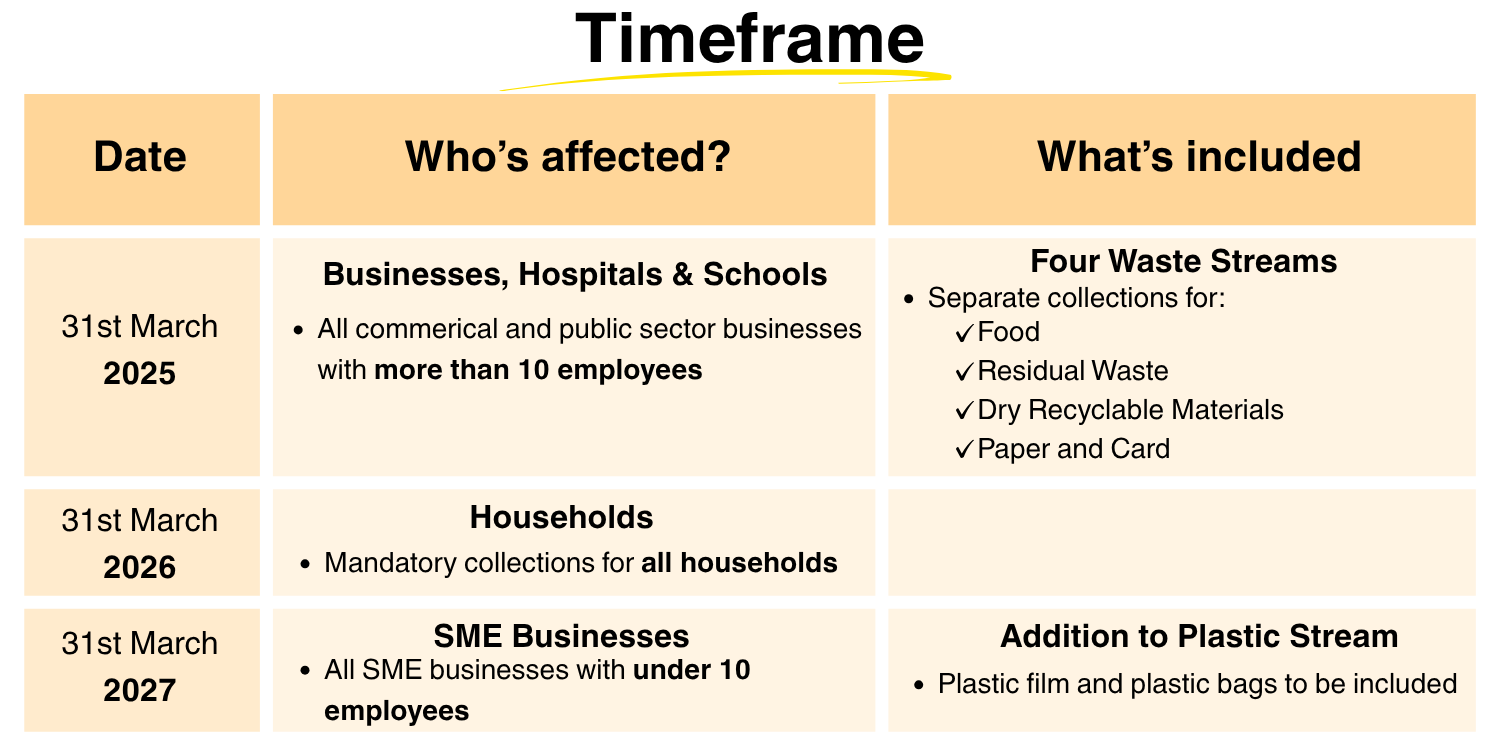
Businesses must ensure that recyclable materials are segregated appropriately and collected separately where required. This typically includes paper and card, plastics, metals, glass, food waste and residual waste. Organisations should also ensure that waste contractors are providing compliant collection services and that internal waste management procedures reflect the requirements. The government has set an ambition to recycle 65% of municipal waste by 2035, and Simpler Recycling is intended to contribute towards that target.
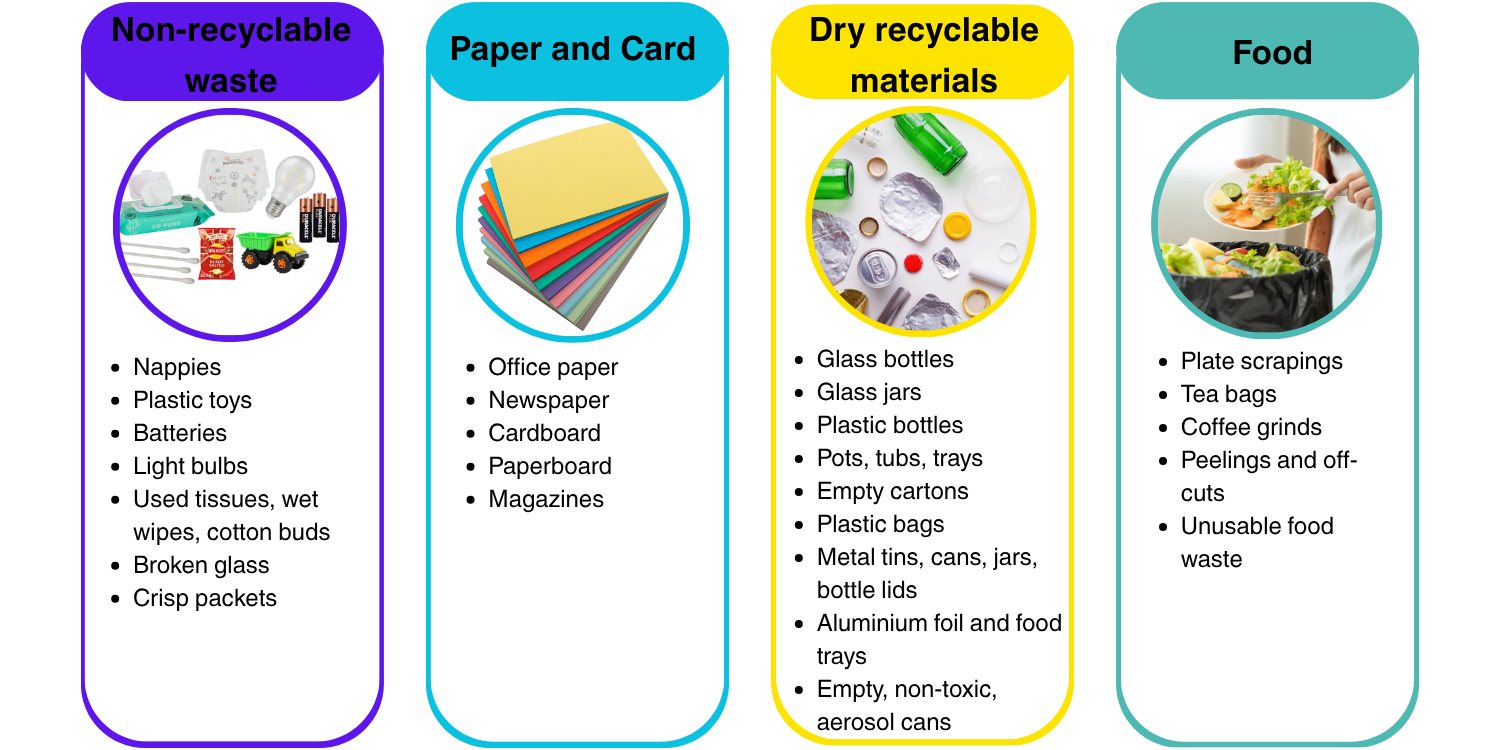
The new default requirement for most households and workplaces will be 4 containers for:
Construction sites must recycle materials separately from other construction waste. This includes cardboard packaging from new appliances, along with food or packaging waste from contractors on site.
You should discuss practical solutions with your waste collector. For example, for skip waste collections, your waste collector may ask you to place cardboard in a bag on top of the skip for separate collection. The recyclable materials should not be mixed or compacted with other construction waste.
Contaminated Recyclable Waste
Recycling contamination happens when the wrong items are put in a recycling bin, but it also happens when recyclable waste is not clean enough to recycle (e.g. when there is food or liquid residue in plastic or cardboard containers).
To reduce the risk of contamination you should:
Provide clear instructions, including clear signs on or near bins
Review recurring contamination issues and make improvements such as making changes to signs, bin locations, or the number of bins to make recycling easier
If you identify significant contamination in your recyclable waste before collection, you should dispose of it as general waste. You can speak to your waste collector to discuss if necessary.
Most waste collectors typically include contractual clauses that allow them to refuse to collect or charge additional fees where recycling is highly contaminated.
If the Environment Agency (EA) identifies contamination during an inspection, it will consider the circumstances and the steps your business has taken to comply before deciding on any enforcement action.
Is it breaking the law to not apply the change?
Businesses have a legal duty to ensure waste disposal is safe, secure and legal and take all reasonable steps to keep waste to a minimum.
If you do not comply with the requirements, you are at risk of receiving a compliance notice from the EA. Compliance notices can also be issued against anyone who is not separating waste in agreement with their waste collector.
It is an offence to fail to comply with a compliance notice and enforcement action may be taken against you in line with the EA’s Enforcement and Sanctions policy.
How Help With ISO Can Help You
During recent audits we are seeing an increasing number of organisations caught out simply because they aren’t aware of this legislation. As a result, certification houses are raising non-conformances everywhere!
If your organisation has not yet reviewed its waste management arrangements, now is the time to do so!
These changes may have a significant impact on how businesses are currently managing their waste. We can help you make changes to your ISO management system by updating:
Waste Management documented procedures
Aspects and Impacts Register
Emergency Preparedness and Response Procedure
Monitor and measure performance
Legal Register
Waste contracts
Updating procedures, engaging with your waste contractor, ensuring suitable recycling facilities are available, and briefing employees can help avoid both legal compliance issues and unnecessary audit findings.